

Before the appraiser arrives, a Black family removes its photographs, children’s artwork, books, and cultural decorations, fearing that visible signs of identity could affect the value assigned to its home. An appraisal may appear to be a neutral calculation based on square footage, condition, location, and comparable sales, but for families confronting appraisal bias, the number can determine whether a sale succeeds, a refinancing application is approved, or years of accumulated equity become available.
Behind every disputed valuation is therefore a deeply human question: did the market assess the property fairly, or did it also judge the people who call it home?
When Identity Enters the Valuation Process
Some Black homeowners have described removing family photographs, cultural artwork, books, and other signs of identity before an appraisal. Others have reportedly asked White friends to be present in the hope that their homes would receive a fairer valuation.
This practice is sometimes called “whitewashing” a home. Its existence exposes a deep crisis of trust. Homeowners should not feel that they must erase themselves from the spaces they created in order for their property to be judged fairly.
Not every disappointing appraisal proves discrimination. However, widespread fear of biased treatment shows that many families do not believe the system consistently separates property value from race and neighborhood identity.
A Low Valuation Can Reshape a Family’s Future
An undervaluation can cause an immediate financial loss. A buyer’s financing may collapse, a seller may be forced to accept less money, or a homeowner may be unable to refinance on favorable terms.
The consequences can continue long after the appraisal appointment. Reduced equity may limit a family’s ability to pay for education, start a business, complete essential repairs, manage an emergency, or assist the next generation with a down payment.
When similar outcomes occur repeatedly across communities, appraisal bias can contribute to the racial wealth gap. The harm compounds as families lose not only present value but also the future opportunities that value could have supported.
Appraisals Reflect the Markets That Produced Them
Appraisers rely heavily on comparable sales and neighborhood market data. Those tools may appear neutral, but the underlying market was shaped by redlining, restrictive covenants, segregation, urban renewal, unequal lending, and uneven public investment.
If historical discrimination depressed values in a neighborhood, using previous sales without sufficient scrutiny may reproduce that inequality. Technology does not automatically solve this problem. Automated valuation models can also inherit patterns embedded in historical data.
The central question is therefore not only whether an appraiser holds personal prejudice. It is whether the valuation system continues to treat the effects of earlier discrimination as objective market reality.
The Emotional Cost Cannot Be Calculated
A biased appraisal communicates something painful: that a family’s investment may be worth less because of who they are or where they live.
Homeowners may begin questioning whether repairs, renovations, and years of responsible ownership will ever be recognized fairly. The process can replace pride with humiliation and turn an ordinary financial transaction into an experience of suspicion and self-erasure.
That emotional burden rarely appears on an appraisal form, but it is part of the true cost.
Start a Different Conversation About Value
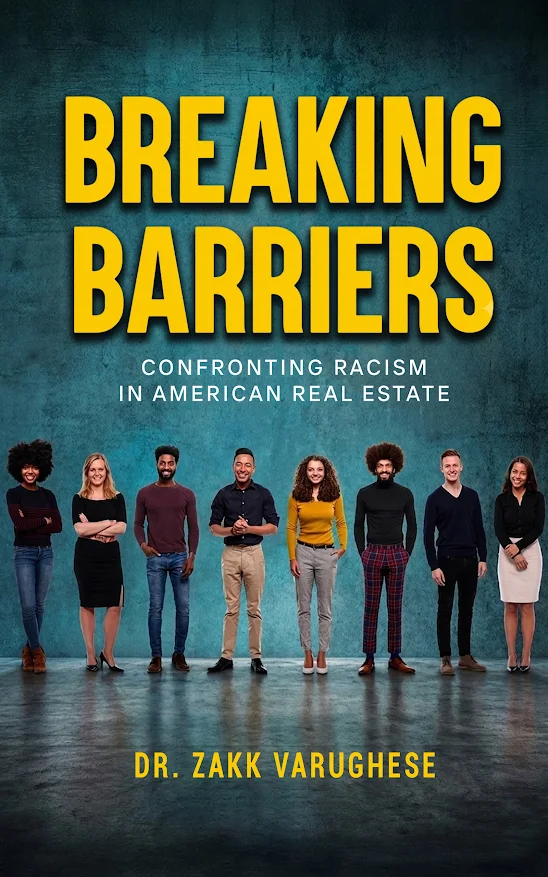
Breaking Barriers: Confronting Racism in American Real Estate by Dr. Zakk Varughese asks readers to examine what property valuation reveals about identity, history, and institutional trust. Drawing on housing research, documented cases, composite narratives, and twenty years of professional experience as a Black real-estate broker in the Deep South, Dr. Varughese connects individual appraisal experiences to the systems that created unequal neighborhood value.
The book is designed to spark action as well as reflection. Homeowners can use its investigative tools to ask informed questions and document concerns. Appraisers, lenders, agents, and brokers can use its ethical framework to examine assumptions, comparable selections, complaint procedures, and accountability practices. Educators and community organizations can use its discussion guides to lead meaningful conversations about valuation and wealth.
Make Breaking Barriers the starting point for an appraisal-equity discussion in your brokerage, lending office, classroom, or community. Explore the evidence, examine how value is produced, and help build a market in which no family feels compelled to hide its identity to receive an honest number. Get your copy today!