

Homeownership is often described as the American dream. It provides more than shelter: it can create financial stability, generate equity, support education, and give families an asset to pass to the next generation. Yet access to this wealth-building opportunity has never been distributed equally.
The connection between the racial wealth gap and homeownership is not simply the result of individual financial decisions. It reflects generations of housing policies that helped some families acquire valuable property while preventing others from doing the same.
Homeownership Creates Generational Advantages
A home can appreciate over time, allowing its owner to accumulate wealth while making mortgage payments. That equity can later fund education, support a business, provide security during an emergency, or become an inheritance.
The benefits also extend beyond the property itself. Homeownership can provide access to well-funded schools, dependable infrastructure, safer environmental conditions, professional networks, and neighborhoods where property values receive sustained public and private support.
When these advantages pass from parents to children, they compound. Families may help the next generation make a down payment, avoid costly debt, or purchase a home earlier in life.
Housing Policy Created Unequal Starting Points
After emancipation, formerly enslaved Black families generally entered freedom without land, capital, or reliable legal protection. Later, racial zoning ordinances and restrictive covenants limited where Black Americans could live and own property.
During the twentieth century, federal housing programs dramatically expanded homeownership, but their benefits were distributed unequally. Redlining and discriminatory underwriting restricted mortgage credit in many Black neighborhoods while government-backed financing helped White families purchase homes in growing suburbs.
These were not merely missed transactions. Families denied fair access to mortgages also lost decades of appreciation and the opportunity to transfer valuable assets to their descendants.
Neighborhood Value Was Shaped by Investment
Property values do not rise or fall through market forces alone. Public decisions concerning schools, transportation, infrastructure, zoning, environmental protection, and commercial development influence which neighborhoods attract investment.
Communities that received mortgage credit and public support were more likely to experience rising values. Neighborhoods subjected to redlining, urban renewal, highway construction, and chronic disinvestment often faced declining property values and displacement.
The market later treated these policy-created conditions as natural measures of neighborhood desirability.
Past Policies Still Affect Present Buyers
Explicit housing discrimination is illegal, but historical inequality continues to influence credit profiles, down-payment resources, inherited wealth, and neighborhood conditions.
Modern barriers can also appear through biased appraisals, unequal lending terms, steering, exclusionary zoning, rising insurance costs, and automated systems trained on historical market data. Even when policies do not mention race, they can reproduce disadvantages created by earlier policies.
This explains why equal treatment at the point of sale does not necessarily create equal opportunity. Buyers arrive at that moment carrying very different financial histories.
Understand the System and Help Change It
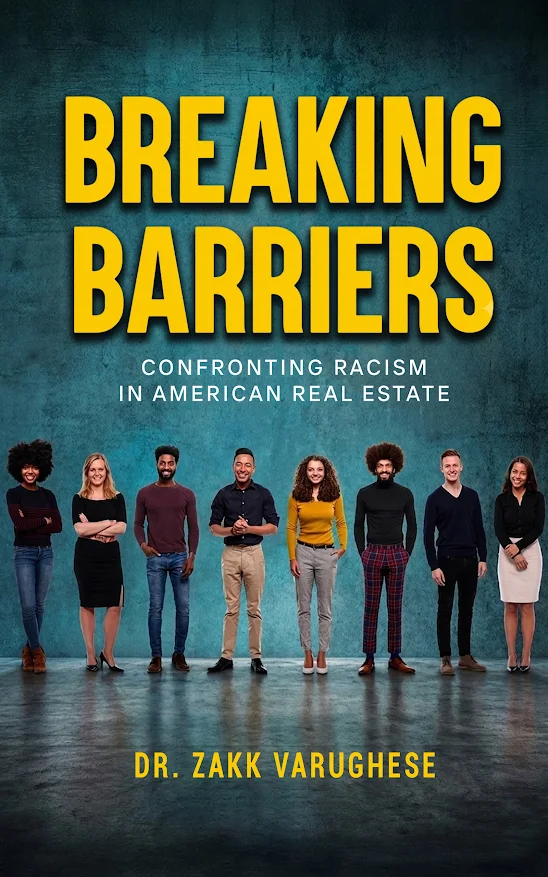
In Breaking Barriers: Confronting Racism in American Real Estate, Dr. Zakk Varughese examines how law, finance, professional practice, geography, institutions, and environmental conditions have shaped housing opportunity across generations.
Drawing on housing scholarship, documented history, public records, composite narratives, and two decades of professional experience as a Black real estate broker in the Deep South, Dr. Varughese explains why the racial wealth gap cannot be separated from the history of American housing.
The book also moves beyond diagnosis. Its practical framework, discussion guides, investigative toolkit, and recommendations equip homebuyers, real-estate professionals, educators, policymakers, and community advocates to identify hidden barriers and demand greater accountability.
Read Breaking Barriers: Confronting Racism in American Real Estate to understand how yesterday’s housing policies became today’s wealth disparities and what each of us can do to build a market where homeownership creates opportunity without rationing dignity, security, or belonging. Buy your copy today!