

Buying a home is more than a financial transaction. It is a decision that affects where families build their lives, access education, establish community connections, and create long-term financial security. Because real estate agents guide buyers and sellers through one of the most important decisions they will make, their role extends beyond showing properties and negotiating offers. They help shape how people experience the housing market.
Real estate professionals influence which homes buyers see, what information they receive, how neighborhoods are described, and how transactions are managed. When agents provide fair, transparent, and consistent service, they help create a housing environment where individuals have the opportunity to make informed choices.
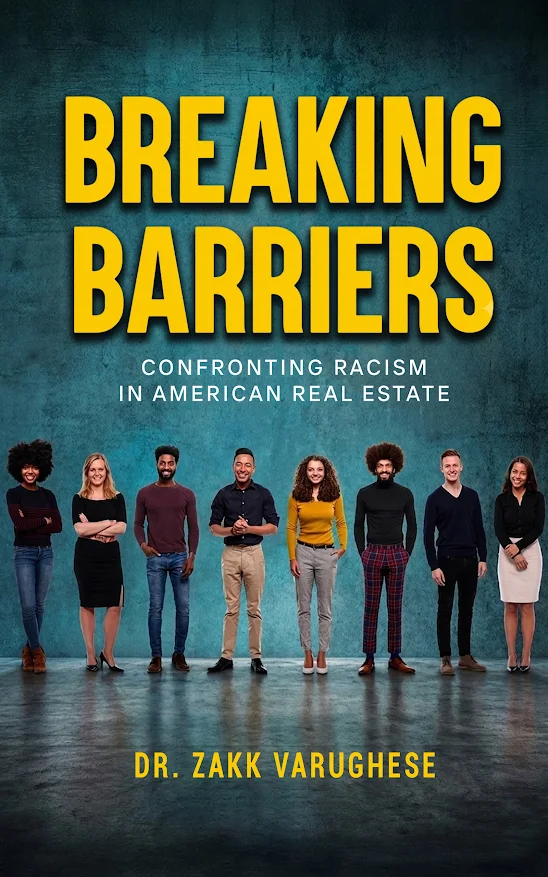
In Breaking Barriers: Confronting Racism in American Real Estate, Dr. Zakk Varughese examines how professional practices, institutions, and systems have historically influenced access to housing. The book explores the responsibility of real estate professionals in understanding past barriers and helping build a more equitable housing future.
Understanding the Influence of Real Estate Agents
Real estate agents occupy a unique position in the housing process. They connect buyers with properties, interpret market information, communicate options, and help clients navigate complex decisions.
Because of this role, agents can either expand or limit housing opportunities. A buyer’s experience may be shaped by the number of homes they are shown, the neighborhoods they are introduced to, the information they receive, and the level of support they receive throughout the transaction.
Dr. Varughese identifies professional access as one of the key dimensions of housing opportunity. Real estate brokers, agents, lenders, appraisers, attorneys, and other professionals influence how housing policies are experienced in everyday life.
Providing Equal Access to Housing Options
One of the most important responsibilities of a real estate agent is ensuring that clients have access to complete and accurate information.
Equal housing opportunity means buyers should be able to explore properties based on their preferences, needs, and qualifications, not based on assumptions about where they belong.
Agents can support fair housing by:
- Presenting a broad range of available properties
- Providing objective information about neighborhoods
- Avoiding assumptions about a buyer’s preferences
- Allowing clients to make independent decisions
- Applying consistent standards to all clients
A professional’s personal opinions about a neighborhood, its residents, or its perceived “fit” should never replace factual information.
Avoiding Steering and Unintentional Bias
Housing discrimination does not always appear as an obvious refusal or direct exclusion. Sometimes it can occur through subtle actions, such as recommending certain neighborhoods while discouraging others without objective reasons.
Dr. Varughese’s book discusses how modern forms of exclusion can operate through professional practices, referral networks, and everyday conversations. The language may sound helpful, but it can unintentionally narrow a buyer’s choices.
For example, telling a client that they may “feel more comfortable” in another area can influence their decisions without providing meaningful information. Fair housing requires agents to focus on facts, not assumptions.
Building Trust Through Transparency and Education
Trust is essential in real estate. Buyers need confidence that their agent is providing honest guidance and representing their interests.
Agents can strengthen trust by:
- Explaining the buying process clearly
- Sharing relevant market information
- Discussing financing and transaction requirements openly
- Encouraging buyers to ask questions
- Continuing education on fair housing responsibilities
A knowledgeable agent does more than complete transactions; they help clients understand their choices.
The Future of Fair Housing in Real Estate
The real estate industry continues to change through technology, online platforms, automated systems, and new ways of connecting buyers and sellers. While these tools can improve efficiency, they also require careful attention to fairness and transparency.
Real estate professionals remain essential because human judgment continues to influence how housing opportunities are created and experienced. Agents who prioritize ethical practices can help ensure that the housing market serves a wider range of communities.
Learn More About Housing Opportunity and Real Estate Responsibility
For readers who want a deeper understanding of how real estate professionals influence housing access Breaking Barriers: Confronting Racism in American Real Estate by Dr. Zakk Varughese provides an insightful examination of the systems, practices, and decisions that shape American housing.
The book explores the history of housing inequality, the evolution of real estate practices, the role of professional institutions, and the challenges facing the industry today. It examines how legal systems, financial structures, and professional decisions interact to influence who can access housing opportunities.
Whether you are a real estate professional, homebuyer, educator, or someone interested in the future of housing, Breaking Barriers offers valuable insight into the importance of awareness, responsibility, and ethical action in creating a more transparent housing market.
Buy your copy today and discover how real estate professionals can help transform housing from a system of barriers into a pathway of opportunity, fairness, and inclusion.